
Resting Autistic Face: Why Your Neutral Expression Ignites Conflict (And Why It’s Not Your Fault)
By Michelle Karth, PhD, Adult Autism Assessment Center
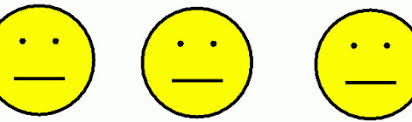
Picture This:
You're sitting next to your partner right after receiving some good news.
Maybe you finally secured an impossible dinner reservation you've been hyper-fixating on, or an intricate project you’ve been working on for months just perfectly clicked into place.
Internally, there are fireworks. You are experiencing pure, unadulterated joy. You’re sitting down, completely content, when out of the blue you hear,
“Are you alright?”
You’re startled by the comment. "Yeah, I'm great," you say. Because you are great.
"Are you sure? You look upset."
"I’m not upset. I'm thrilled."
You know your partner means well, but now you’re...angry.
You’re angry because you’re being accused of an emotion that you aren’t feeling, and now you have to perform emotional labor to prove you aren't upset.
This mismatch between your internal state and your external display is one of the most common friction points for neurodivergent adults.
Here’s another example that many neurodivergent people face:
I was at a concert a few years ago when I was living in England, and I was ecstatic. I never thought I’d see this band live, but here I was, waiting in line. It was drizzling, and we slowly made our way to the doorway of the O2 Arena.
Almost there, a security guard said to me, “Oh, don’t look so sad, it’s a concert”.
That completely took me by surprise because I couldn’t have been happier. This exchange didn’t ruin the concert for me, but I still remember the awkward way it made me feel.
Here is the truth: Your face isn't broken. It’s functioning on a different operating system.
The Science: It’s Not Malice, It’s Motor Planning
In the neurodivergent community, we often call this "Flat Affect." Clinicians might call it "reduced facial expressivity." But let’s look at neuroscience, because it validates your experience in a validating way.
Research shows that the production of facial expressions is a complex sensorimotor behavior. In autistic individuals, there’s often a disruption in the connectivity between the primary somatosensory cortex (S1) and the primary motor cortex (M1) specifically related to the face.
This means the feedback loop that tells your brain "I’m smiling" or "I’m frowning" is quieter. So when I’m standing in an ecstatic concert crowd with a ‘frown’ on my face, or I don’t look excited after receiving a gift…it’s not that I’m unhappy, it’s just that my face is slow to catch up.
Autistic people often show diminished muscle action in the upper face (the eyes and eyebrows) compared to neurotypical people. Since the eyes are where neurotypical people look to determine "genuine" emotion, your lack of movement there registers to them as coldness or anger.
My dad once said to me when I was a kid, that he and I have a ‘problem’ because we always look so serious and angry.
I understand now that, one, my dad may have been undiagnosed autistic, and two, why I look so serious to people all the time!
This isn't about you or me lacking feelings. Studies contradict that mentality.
They show that while observers struggle to identify happy or sad expressions in autistic people, they often rate our expressions of fear or anger as more intense than those of non-autistic people.
This means we feel deeply. But the way our brains function to broadcast those feelings are wired differently.
The Double Empathy Problem: A Clash of Channels
The conflict you experience with people who question if you’re ‘alright’ involves a theory called the Double Empathy Problem.
In the past, psychology has blamed us for "lacking empathy." So people have begun to believe this stereotype. However, the Double Empathy Problem flips this mentality. It argues that we don’t lack empathy.
Instead, communication breakdowns occur because autistic and neurotypical people have distinct, valid, and different communication styles.
Unfortunately, neurotypical people prioritize the Non-Verbal Channel.
They read tone, facial expression, and body language to determine truth.
So when we say "I'm fine" (and really mean it) but our face suggests otherwise, they trust the face.
I think one of the moments this hits hardest is during gift-giving. It brings up so much anxiety for me. I never want the person who chose the gift to feel disappointed, or to think I’m ungrateful or unhappy. The fear of hurting their feelings can overshadow the moment entirely.
Autistic people prioritize the Verbal Channel. We mean what we say. We weigh the literal data of the words more heavily than the performance of the face.
My autistic sister will often complain, “why can’t people just say what they mean!?” And, I can’t help but agree.
The Translation: You vs. The World
When this mismatch in communication happens, it creates a feedback loop of defensiveness.
To the Autistic Partner, it feels like:
• Gaslighting: "I know how I feel. Why are you telling me I feel something else?"
• Exhaustion: "I have to manually operate my face like a puppet just to be believed."
• Confusion: "I answered the question honestly. Why are we fighting?"
From personal experience, it’s exhausting having to pretend to be overly happy when you feel perfectly fine.
To the Neurotypical Partner, it feels like:
• Rejection: "Their face is blank/stone-cold. They must be bored with me or judging me."
• Hostility: "I can feel tension (which might actually be your sensory overwhelm), but they’re denying it."
• Dishonesty: "Their words don't match their face, so they must be lying."
The Tools: Bridging the Gap
As autistic people, we can’t rewire our motor cortex, nor should we want to. However, we can hack the communication dynamic to stop the fights before they spiral.
1: Believe the Verbal Channel
This is a rule for the relationship. If you say, "I am not mad," the partner must accept that as data. The Double Empathy Problem teaches us that "empathy collapse" happens when the non-autistic partner stops trusting the verbal channel because the non-verbal channel isn't giving them the dopamine hit of reassurance they expect.
2: Name the "Resting Face"
Explicitly label when your face is resting. "I’m just in power-saving mode." "My face is offline because I’m thinking." This reduces the ambiguity that causes your partner’s anxiety to spike.
3: Check for Alexithymia
About 50% of autistic people have Alexithymia—difficulty identifying their own emotions. Sometimes, you are distressed, but you haven't processed it yet. If you aren't sure, try saying: "I don't have a label for my feeling yet. I need 10 minutes to scan my body."
4: The "Manual Mode Disclaimer"
If you have to have a serious conversation, prep your partner: "I’m going to focus really hard on listening to your words, which means my face might go flat. Please don't read into it."
Your neutral face is not a deficit.
It’s often a sign of deep processing or necessary sensory regulation. You do not need to smile to be worthy of connection. You just need to be understood.
If you are tired of being mistranslated, you aren't alone.
Curious about where you land on the spectrum of traits? The Autism Spectrum Quotient Test (AQ) or the Ritvo Autism & Asperger Diagnostic Scale (RAADS-14) can be illuminating first steps.
If this dynamic feels all too familiar, we are here to help.
For neuro-informed couples or individual therapy, click here.
For an assessment and/or diagnosis, click here.

Michelle Karth, PhD
Adult Autism Assessment Center
© 2025 New Path Family of Therapy Centers Inc. All rights reserved. No portion of these statements may be reproduced, redistributed, or used in any form without explicit written permission from the New Path Family of Therapy Centers.
Want to learn more about yourself?
Explore our sister site, Adult Autism Assessment, and take a deeper dive into your journey of self-discovery. Click the links below to get started!
Resources & Further Reading
Bress, K. S., & Cascio, C. J. (2024). Sensorimotor regulation of facial expression—An untouched frontier. Neuroscience & Biobehavioral Reviews, 162, 105684. https://pmc.ncbi.nlm.nih.gov/articles/PMC12603653/
Brewer, R., Biotti, F., Catmur, C., Press, C., Happé, F. G. E., Cook, R., Bird, G. (2016). Can neurotypical individuals read autistic facial expressions? Atypical production of emotional facial expressions in autism spectrum disorders. Autism Research, 9(2), 262–271. https://pmc.ncbi.nlm.nih.gov/articles/PMC12332230/
Calderoli, E. A. T., Varriale, M. C., & Kapczinski, F. (2026). A Distinct Communication Strategies Model of the Double Empathy Problem. arXiv preprint arXiv:2602.02562. https://arxiv.org/abs/2602.02562
Cheang, R. T., Skjevling, M., Blakemore, A. I., Kumari, V., & Puzzo, I. (2024). Do you feel me? Autism, empathic accuracy and the double empathy problem. Autism, 29(9), 2315–2327. https://pmc.ncbi.nlm.nih.gov/articles/PMC12332230/
Guha, T., Yang, Z., Grossman, R. B., & Narayanan, S. S. (2018). A computational study of expressive facial dynamics in children with autism. IEEE Transactions on Affective Computing, 9(1), 14–20. https://pmc.ncbi.nlm.nih.gov/articles/PMC6022860/
Hull, L., Mandy, W., Lai, M. C., Baron-Cohen, S., Allison, C., Smith, P., ... & Petrides, K. V. (2019). Development and validation of the camouflaging autistic traits questionnaire (CAT-Q). Journal of Autism and Developmental Disorders, 49, 819-833. https://pmc.ncbi.nlm.nih.gov/articles/PMC12659362/
Kothare, H., Ramanarayanan, V., Neumann, M., Liscombe, J., Richter, V., Lampinen, L., ... & Demopoulos, C. (2024). Vocal and facial behavior during affect production in autism spectrum disorder. Journal of Speech, Language, and Hearing Research, 68(2), 419-434. https://www.researchgate.net/publication/387226682_Vocal_and_Facial_Behavior_During_Affect_Production_in_Autism_Spectrum_Disorder
Kothare, H., Roesler, O., Burke, W., Neumann, M., Liscombe, J., Exner, A., ... & Ramanarayanan, V. (2022). Speech, facial and fine motor features for conversation-based remote assessment and monitoring of Parkinson’s disease. 44th Annual International Conference of the IEEE Engineering in Medicine & Biology Society (EMBC), 3464-3467. https://pmc.ncbi.nlm.nih.gov/articles/PMC12603653/
Milton, D. E. M. (2012). On the ontological status of autism: The ‘double empathy problem’. Disability & Society, 27(6), 883–887. https://arxiv.org/abs/2602.02562
Northrup, J. B., Mazefsky, C. A., & Day, T. N. (2024). Valence and intensity of emotional expression in autistic and non-autistic toddlers. Journal of Autism and Developmental Disorders, 55(3), 832–842. https://pmc.ncbi.nlm.nih.gov/articles/PMC11297193/
Trevisan, D. A., Bowering, M., & Birmingham, E. (2016). Alexithymia, but not autism spectrum disorder, may be related to the production of emotional facial expressions. Molecular Autism, 7, 46. https://pmc.ncbi.nlm.nih.gov/articles/PMC5106821/


The text is very well written and the information is presented logically. The text maintains a good balance between simplicity and completeness. I shared this text in a discussion group dedicated to the topic. It is a good summary of the topic covered in a clear way.